
📷 Kredit: Neven Krcmarek
Penjelasan
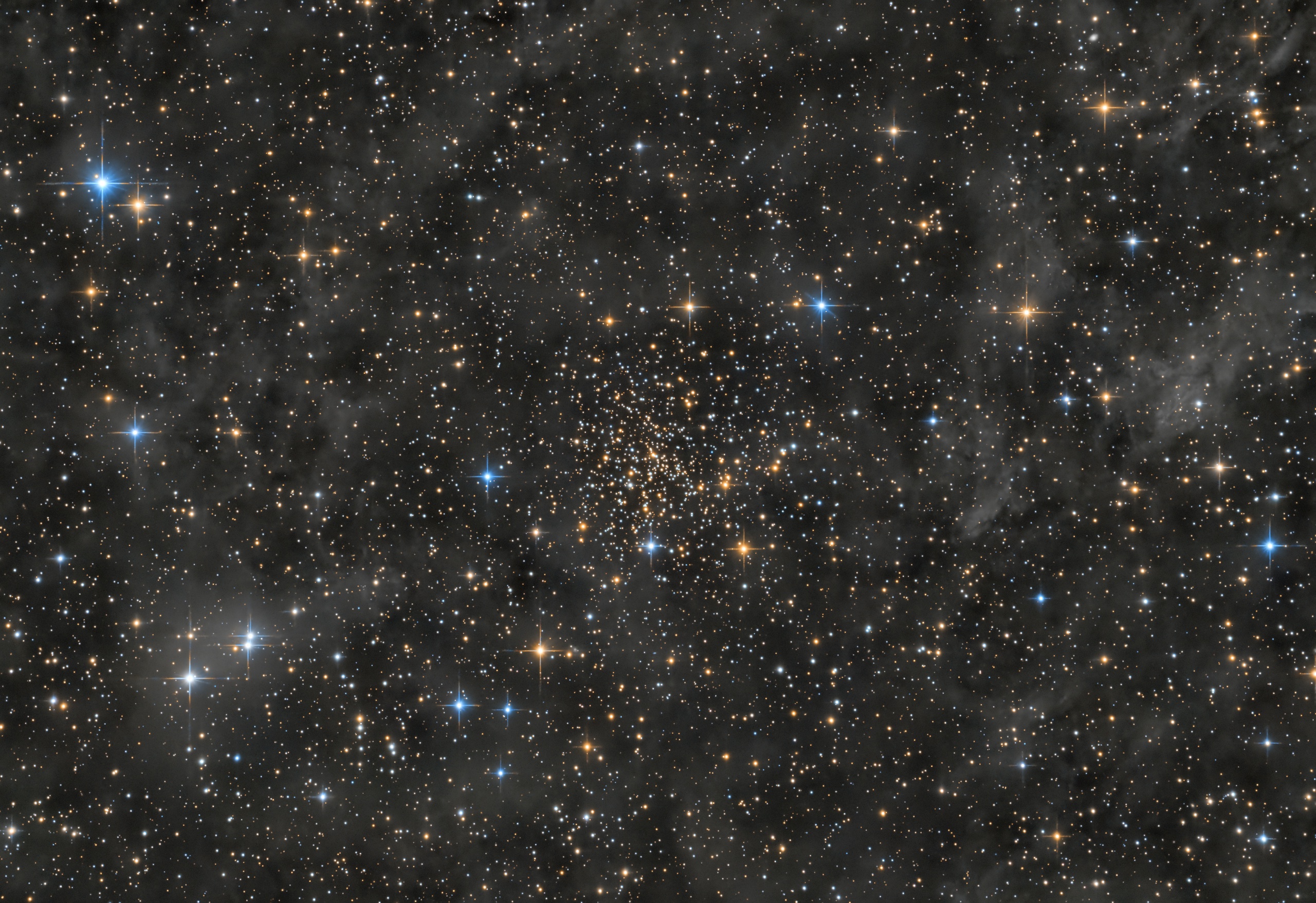
Pernah dengar atau baca nama objek langit diawali dengan kata NGC? Itu adalah singkatan dari New General Catalog, senarai objek langit yang diterbitkan pada 1888 oleh J. L. E. Dreyer, astronom yang mengumpulkan temuan-temuan dari keluarga Herschel dan sejumlah astronom lain ke dalam satu katalog lengkap. Lebih dari 130 tahun kemudian, singkatan NGC masih melekat pada ribuan objek di langit malam. Salah satunya adalah NGC 188 pada foto ini, sebuah gugus bintang terbuka yang terletak sekitar 6.000 tahun cahaya dari Bumi di rasi bintang Cepheus. Yang membuatnya istimewa adalah usianya, sekitar 7 miliar tahun, sangat tua untuk ukuran gugus terbuka yang biasanya terurai jauh lebih cepat oleh tarikan gravitasi galaksi. Bintang-bintang di dalamnya didominasi raksasa merah tua yang memancarkan cahaya kekuningan hangat, tanda bahwa mereka sudah lama melewati masa mudanya. NGC 188 juga dikenal sebagai Caldwell 1 dalam katalog modern, dan karena letaknya yang menghadap tepat ke arah kutub langit utara, para pengamat menjulukinya Polarissima Cluster, gugus yang paling dekat dengan titik utara langit.
Sumber: NASA APOD | 2026-05-13
English: The New General Catalog of star clusters and nebulae really isn't so new. In fact, it was published in 1888 - an effort by J. L. E. Dreyer to consolidate the work of astronomers William, Caroline, and John Herschel along with others into a useful single, complete catalog of astronomical discoveries and measurements. Dreyer's work was largely successful and is still important today, as this famous catalog continues to lend its "NGC" to bright clusters, galaxies, and nebulae. Take for example the star cluster known as NGC 188 (item number 188 in the NGC compilation). It lies about 6,000 light-years distant in the northern constellation Cepheus and represents a galactic or open star cluster. With an age of about 7 billion years, NGC 188 is old for an open cluster. Its old, evolved red giant stars have yellowish hues in this colorful, deep sky view. NGC 188 also enjoys the designation Caldwell 1 in a modern compilation of deep sky objects. Located well above the plane of the Milky Way and seen in the direction of planet Earth's north celestial pole, the ancient stellar group is known to some as the Polarissima Cluster.