
📷 Kredit: Neven Krcmarek
Penjelasan
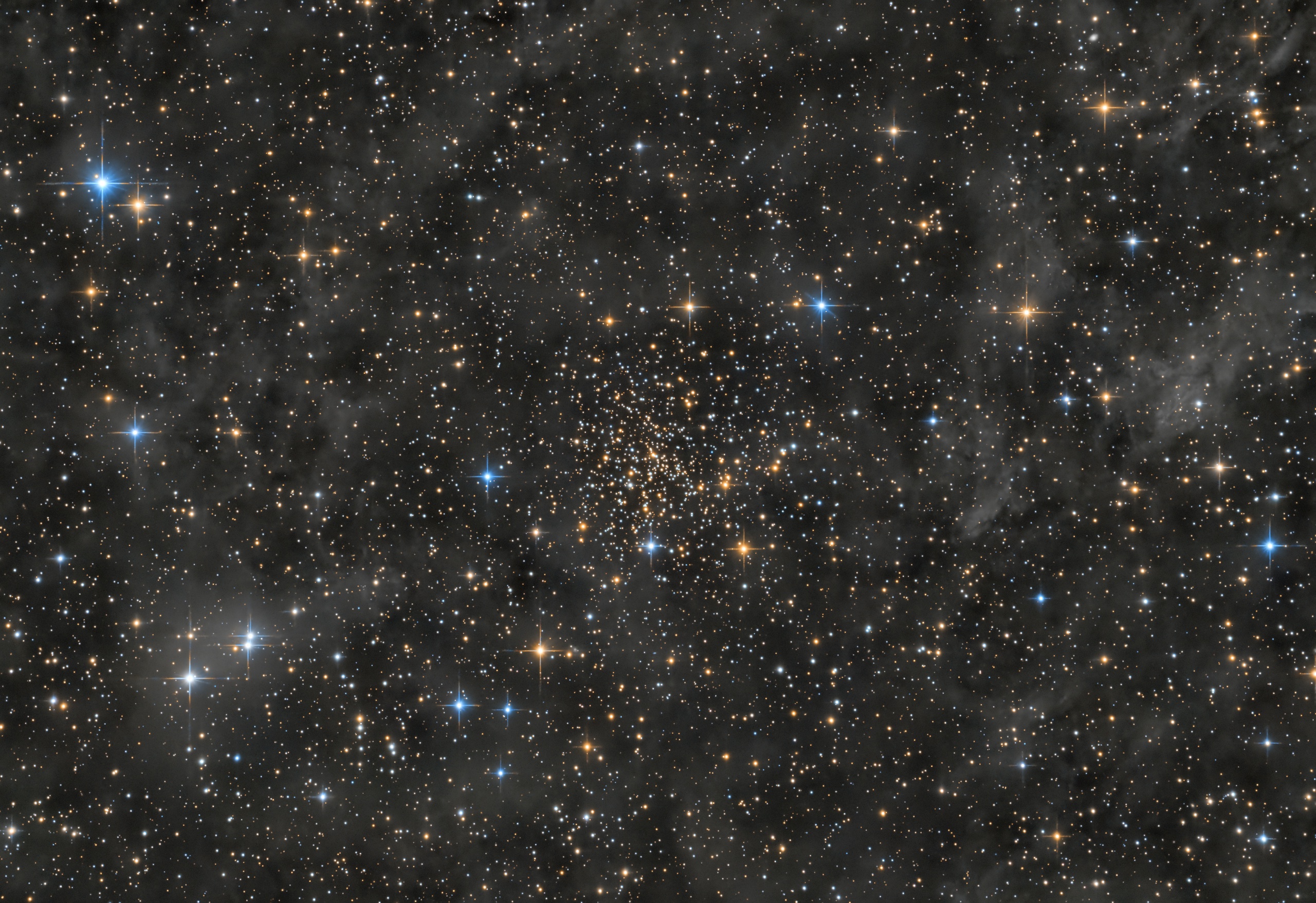
Katalog Umum Baru gugusan bintang dan nebula sebenarnya bukanlah hal yang baru. Bahkan, katalog ini diterbitkan pada tahun 1888—sebuah upaya oleh J. L. E. Dreyer untuk mengkonsolidasikan karya para astronom William, Caroline, dan John Herschel beserta yang lainnya ke dalam satu katalog lengkap yang bermanfaat tentang penemuan dan pengukuran astronomi. Karya Dreyer sebagian besar berhasil dan masih penting hingga saat ini, karena katalog terkenal ini terus memberikan sebutan "NGC" untuk gugusan bintang, galaksi, dan nebula yang terang. Ambil contoh gugusan bintang yang dikenal sebagai NGC 188 (nomor item 188 dalam kompilasi NGC). Gugusan ini terletak sekitar 6.000 tahun cahaya di konstelasi Cepheus di belahan utara dan mewakili gugusan bintang galaksi atau gugusan bintang terbuka. Dengan usia sekitar 7 miliar tahun, NGC 188 tergolong tua untuk sebuah gugusan bintang terbuka. Bintang-bintang raksasa merahnya yang tua dan telah berevolusi memiliki rona kekuningan dalam pemandangan langit dalam yang penuh warna ini. NGC 188 juga dikenal dengan sebutan Caldwell 1 dalam kompilasi objek langit dalam modern. Terletak jauh di atas bidang Bima Sakti dan terlihat ke arah kutub langit utara planet Bumi, gugusan bintang kuno ini dikenal oleh sebagian orang sebagai Gugusan Polarissima.
Sumber: NASA APOD | 2026-05-13
English: The New General Catalog of star clusters and nebulae really isn't so new. In fact, it was published in 1888 - an effort by J. L. E. Dreyer to consolidate the work of astronomers William, Caroline, and John Herschel along with others into a useful single, complete catalog of astronomical discoveries and measurements. Dreyer's work was largely successful and is still important today, as this famous catalog continues to lend its "NGC" to bright clusters, galaxies, and nebulae. Take for example the star cluster known as NGC 188 (item number 188 in the NGC compilation). It lies about 6,000 light-years distant in the northern constellation Cepheus and represents a galactic or open star cluster. With an age of about 7 billion years, NGC 188 is old for an open cluster. Its old, evolved red giant stars have yellowish hues in this colorful, deep sky view. NGC 188 also enjoys the designation Caldwell 1 in a modern compilation of deep sky objects. Located well above the plane of the Milky Way and seen in the direction of planet Earth's north celestial pole, the ancient stellar group is known to some as the Polarissima Cluster.