 D Indonesia
4 Agustus 2026
APOD 2026-08-04: Gumpalan Kometaria yang Aneh di Nebula Helix
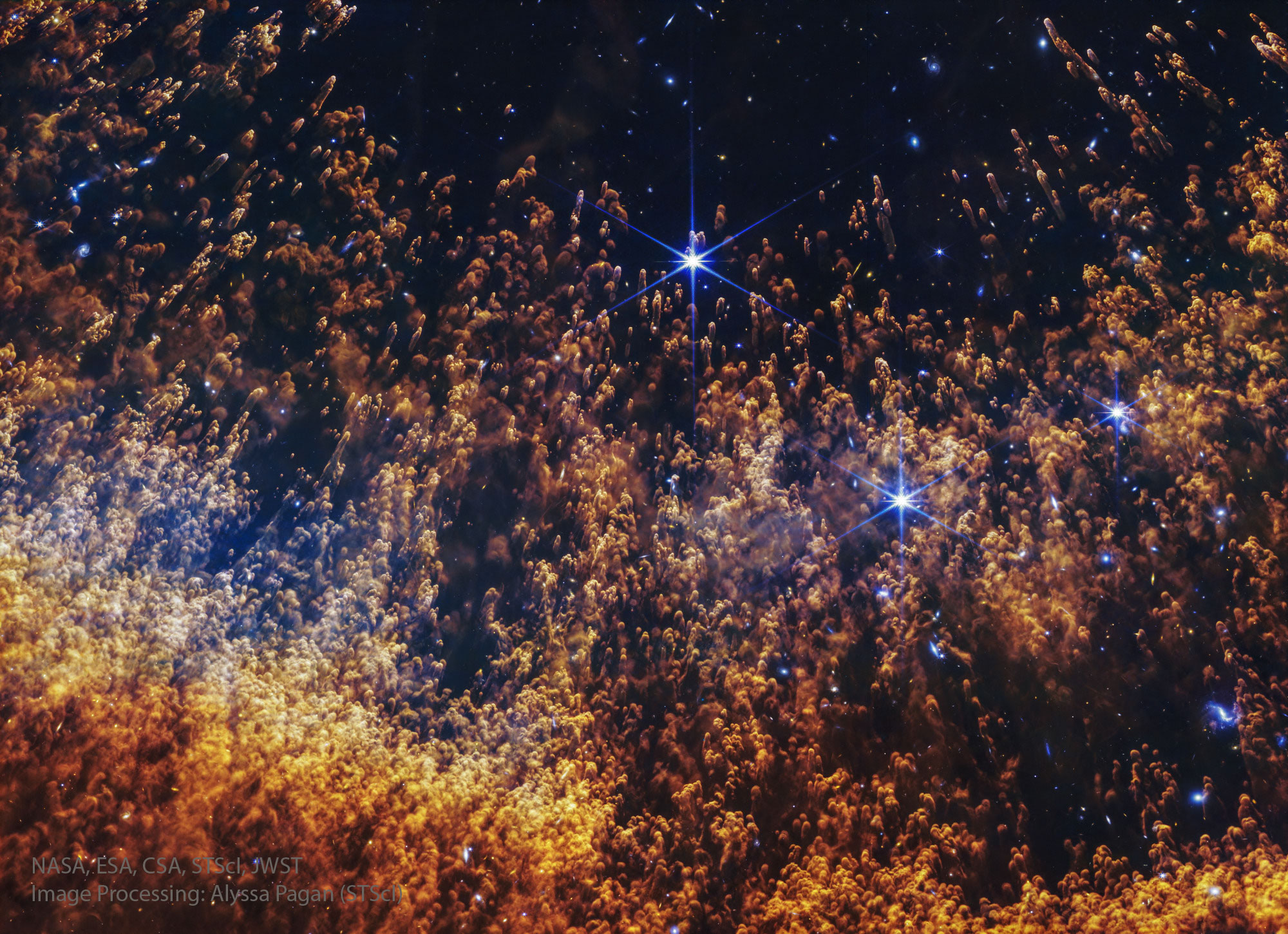
📷 Kredit: NASA, ESA, CSA, STScI, JWST; Pemroses: A. Pagan (STScI)
Penjelasan
Kamu sedang melihat adanya gumpalan gas dan debu yang tidak biasa di nebula planetari. Disebut sebagai “kometaria” karena kenampakannya mirip komet, keberadaan gumpalan tersebut awalnya tidak disadari, sehingga asal-usulnya masih belum dipahami dengan baik oleh para astronom. APOD hari ini menampilkan kometaria yang muncul pada Nebula Helix, yang diabadikan oleh Teleskop Antriksa James Webb dengan detail luar biasa dalam cahaya inframerah. Gumpalan kometaria memiliki massa setara Bumi tetapi ukurannya bisa puluhan kali lebih lebar dari orbit Pluto. Salah satu hipotesis menyatakan kometaria terbentuk ketika gas yang ada pada nebula planetari terdorong keluar oleh angin bintang yang kurang padat tetapi sangat energik dari bintang pusat nebula yang telah berevolusi. Nebula Helix sendiri merupakan tahap akhir dari evolusi bintang bermassa rendah seperti Matahari. Dikenal juga sebagai NGC 7293, Nebula Helix terletak sekitar 650 tahun cahaya jauhnya dari Bumi di arah rasi bintang Aquarius.
Sumber: NASA APOD | 2026-08-04
English: What causes unusual knots of gas and dust in planetary nebulas? Seen also in the Ring Nebula, the Dumbbell Nebula and NGC 2392, the knots’ existence was not initially predicted, and their origins are still not well understood. Pictured here is a fascinating image of part of the Helix Nebula by the James Webb Space Telescope showing tremendous detail in infrared light. The cometary knots have masses similar to the Earth but have sizes typically several times the orbit of Pluto. One hypothesis for the fragmentation and evolution of the knots includes existing gas being driven out by a less dense but highly energetic stellar wind of the central evolving star. The Helix Nebula is one of the closest examples of a planetary nebula created at the end of the life of a Sun-like star. Given a technical designation of NGC 7293, the Helix Nebula lies about 650 light-years away towards the constellation of Water Carrier (Aquarius). Open Science: Browse 4,000+ codes in the Astrophysics Source Code Library